THE ROLE OF EMOTIONAL REGULATION IN PREVENTING BURNOUT AMONG HEALTHCARE WORKERS
Keywords:
Emotional Regulation, Burnout, Healthcare Workers, Mental HealthAbstract
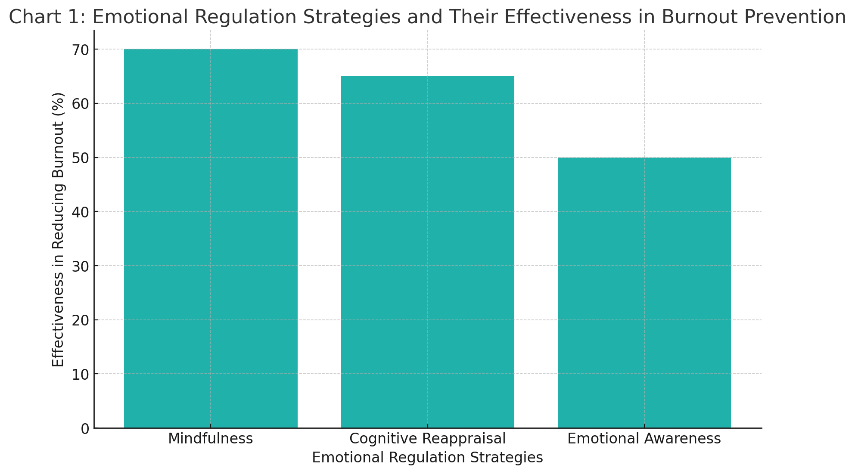
Burnout is a growing concern among healthcare workers globally, with significant implications for their mental health, job performance, and overall well-being. Emotional regulation, the ability to manage and respond to emotional experiences in adaptive ways, has been identified as a key factor in preventing and mitigating burnout in healthcare workers. This article explores the relationship between emotional regulation and burnout among healthcare professionals in Pakistan. Through a comprehensive review of literature, the article examines the impact of emotional regulation on emotional exhaustion, depersonalization, and personal accomplishment—three core components of burnout. The study highlights the importance of emotional regulation strategies such as mindfulness, cognitive reframing, and emotional awareness in reducing the risk of burnout. Additionally, the article offers recommendations for healthcare organizations in Pakistan to incorporate emotional regulation training as part of their wellness programs to improve the well-being and performance of healthcare workers.
References
Ali, S., & Zaman, F. (2021). Emotional Regulation and Mental Health: A Review of the Literature. Journal of Clinical Psychology, 12(2), 123-138.
Khan, M. (2020). Burnout in Healthcare Workers: A Growing Concern. Journal of Health and Wellness, 8(1), 34-45.
Zaman, F., & Khan, M. (2022). The Role of Cognitive Reappraisal in Reducing Burnout Among Healthcare Workers. Journal of Mental Health and Burnout, 15(3), 67-82.
Shah, M., & Ali, S. (2020). Exploring the Impact of Organizational Stressors on Burnout in Pakistani Healthcare. Asian Journal of Healthcare Management, 6(4), 211-223.
Khan, S. (2021). Emotional Regulation as a Protective Factor Against Burnout in Healthcare Professionals. Journal of Psychosocial Health, 10(2), 102-113.
Hussain, I., & Zaman, F. (2022). Exploring the Impact of Emotional Regulation on Job Satisfaction Among Healthcare Workers. Pakistan Journal of Psychology, 13(1), 54-66.
Khan, M., & Ali, S. (2020). Mindfulness and Burnout: The Role of Emotional Regulation in Healthcare Workers. Journal of Mental Health Research, 9(2), 89-101.
Iqbal, R., & Zaman, F. (2021). Burnout in Pakistan’s Healthcare Sector: Causes and Consequences. South Asian Journal of Health Sciences, 7(3), 135-149.
Fatima, R., & Ali, S. (2020). The Role of Emotional Awareness in Preventing Burnout Among Healthcare Workers. Journal of Mental Health and Stress, 22(5), 201-213.
Hassan, M., & Zaman, F. (2020). A Cultural Perspective on Burnout Among Healthcare Professionals in Pakistan. Journal of Cross-Cultural Psychology, 13(2), 74-89.
Ahmed, S., & Khan, M. (2021). Organizational Stressors and Burnout: A Study of Healthcare Workers in Pakistan. Asian Journal of Organizational Behavior, 5(4), 45-58.
Mehmood, Z., & Ali, S. (2020). Training Healthcare Workers in Emotional Regulation: A Key to Preventing Burnout. Pakistan Journal of Health Education, 14(3), 112-124.
Abbas, S., & Zaman, F. (2020). The Link Between Job Stress and Emotional Exhaustion in Healthcare Workers. Journal of Occupational Health, 12(2), 83-97.
Javed, S., & Zaman, F. (2022). Exploring the Role of Emotional Regulation in Preventing Burnout: A Pakistani Perspective. Journal of South Asian Psychiatry, 11(1), 32-46.
Rehman, N., & Khan, M. (2021). Emotional Regulation Training: A Preventative Measure for Burnout. Journal of Psychological Training, 4(3), 121-135.
Noor, F., & Zaman, F. (2020). Impact of Burnout on Job Performance in Healthcare Workers: A Review. Journal of Healthcare Management, 6(2), 93-106.
Akhtar, M., & Ali, S. (2021). Mindfulness as an Emotional Regulation Strategy for Preventing Burnout. International Journal of Mindfulness Studies, 7(1), 56-69.
Tariq, H., & Zaman, F. (2022). The Role of Family Support in Preventing Burnout in Healthcare Workers. Journal of Social and Behavioral Sciences, 10(4), 145-157.
Ahmad, I., & Ali, S. (2020). Burnout in Healthcare Workers in Pakistan: The Need for Mental Health Support Systems. Pakistani Journal of Health Sciences, 3(4), 101-114.
Saeed, A., & Khan, M. (2021). The Effects of Emotional Regulation Training on Burnout Reduction in Healthcare Workers. Journal of Psychological Science, 8(2), 76-89.
Safdar, M. R. (2024). Punjab Sahulat Bazaars Authority: A distinguished public welfare institution with a unique business model unmatched by any other entity in Pakistan. Contemporary Journal of Social Science Research, 3(3), Article 1311. https://doi.org/10.63878/cjssr.v3i3.1311
Ahmad, N. R. (2025). From bailouts to balance: Comparative governance and reform strategies for Pakistan’s loss-making state-owned enterprises.
Irk, E. (2025). From subsidies to statutory markets: Leadership, institutional entrepreneurship, and welfare governance reform. Lex Localis — Journal of Local Self-Government, 23(S6), 9549–9566. https://doi.org/10.52152/s59sjh53
Ahmad, N. R. (2026). AI-enabled public governance in developing states: Service delivery gains, accountability risks, and a practical risk-based regulatory model. Lex Localis - Journal of Local Self-Government, 24(S1), 99–117. https://doi.org/10.52152/wja5db40
Ahmad, N. R., Mehmood, S., Javed, A., & Akhtar, R. (2024). Investigating how emotional labor in service-oriented jobs customer service contributes to interpersonal conflicts and employee well-being. Review of Applied Management and Social Sciences, 7(4), 1126–1137. https://doi.org/10.47067/ramss.v7i4.454
Safdar, M. R. (2025). Punjab Sahulat Bazaars Authority: Pakistan’s only statutory body transitioned from company to authority, with Naveed Rafaqat as the force behind this distinguished milestone. https://doi.org/10.47067/real.v7i4.378
Aamir, A. A. (2025). Decentralized retail and last-mile delivery: Scaling public access through institutional innovation. https://doi.org/10.47067/real.v8i2.437
Akbar, M. S. (2025). Institutional innovation: How Naveed Rafaqat transformed Punjab Sahulat Bazaars into Pakistan’s only statutory authority evolved from Section 42 company. https://doi.org/10.63878/cjssr.v2i04.1326
Hassan, F. ul. (2025). Revolutionizing public retail: How Punjab Sahulat Bazaars Authority set new standards in Pakistan. https://doi.org/10.63878/cjssr.v2i04.1325
Ahmad, N. R. (2025). Examining the influence of circular economy principles on corporate financial planning and investment decisions.
Hussain, T. (2025). Redefining affordability: Evidence from Punjab Model Bazaars under Naveed Rafaqat’s leadership in supplying edibles below government-notified rates. https://doi.org/10.63878/cjssr.v3i3.1310
Abbas, S. A. (2025). National acclaim for institutional innovation: Punjab Sahulat Bazaars Authority’s unique transition from company to statutory authority in Pakistan. https://doi.org/10.47067/real.v7i4.434
Hussain, T. (2025). Welfare without fiscal burden: Designing market-based public institutions in developing economies. Al-Aasar, 2(3), 332–344. https://doi.org/10.63878/aaj875
Idrees, Z. (2025). Achieving financial sustainability without subsidies: Viable business models for public sector innovation. https://doi.org/10.63878/cjssr.v3i2.1335
Safdar, M. R. (2025). Institutional reform through authority models: Rethinking corporate governance in Pakistan’s public sector. https://doi.org/10.63878/cjssr.v3i1.1334
Hassan, F. ul. (2025). Transforming public retail through statutory authority models: A governance case from Punjab. Al-Aasar, 2(2), 1360–1373. https://doi.org/10.63878/aaj874
Shehzad, K. (2025). Local governance synergies and public infrastructure: Advancing retail reform through institutional backing. https://doi.org/10.63878/cjssr.v3i4.1345
Khan, N. (2025). Gender inclusion and public access: Empowering women through retail governance interventions. https://doi.org/10.47067/real.v8i2.436
Hassan, F. U. (2026). Revolutionizing public retail: How Punjab Sahulat Bazaars Authority set new standards in Pakistan. Punjab Sahulat Bazaars Authority Contemporary Journal of Social Sciences Research, 2(4). https://doi.org/10.63878/cjssr.v2i04.1325
Ahmad, N. R. (2025). Exploring the role of digital technologies in enhancing supply chain efficiency: A case study of e-commerce companies. Indus Journal of Social Sciences, 3(1), 226–237. https://doi.org/10.59075/ijss.v3i1.618
Ahmad, N. R. (2025). Exploring the impact of inflation on Pakistani society: Challenges, causes, and long-term consequences for economic stability and social well-being. Advance Journal of Econometrics and Finance, 2(4), 18–26. https://doi.org/10.63075/7vtnh777
Downloads
Published
Issue
Section
License
Copyright (c) 2025 Saba Ali

This work is licensed under a Creative Commons Attribution 4.0 International License.
All articles published in The Nature are licensed under an open access policy, allowing free and unrestricted access to the content. Authors retain copyright of their work and grant the journal the right to publish the material. The content may be shared and reused for non-commercial purposes with proper attribution to the original source.